
Business Branding In Shared Office Space
Innovation, collaboration, flexibility, greater employee retention, and increased productivity are some of the benefits of coworking space. What began with freelancers, digital nomads, and startups has since become very appealing to large corporations such as Bank of America, Microsoft, UBS, and Verizon.
With the growth in shared office space (according to projections, there will be some 41,975 coworking spaces worldwide by the end of 2024), one of the challenges tenants face is promoting their unique businesses within the shared workspace framework. How will you preserve the sense of belonging in your personnel inside a shared workspace?
Here are six ideas to consider:
Network
Networking is the perfect time to let others experience your business brand. The opportunities to network in ever-changing and dynamic coworking spaces are limitless. Tell your company story; make yourself known; share your vision. People buy from those they know and trust and that can only come about through relationship building.
So, start a casual conversation in the common area, practice an open-door policy whenever possible, barter for small services, offer to collaborate on a special project. Remember that part of becoming a successful business owner is getting a handle on networking.
Host Special Events
Boost your brand image by hosting special events. Whether hosting a big or small event, shared experiences with your clients, employees, and other industry players are bound to bring a host of benefits to your business. What’s nice is that coworking spaces with their common areas, numerous meeting rooms, outdoor courts, kitchens, ample parking, high-speed internet, etc., are conducive to such occasions. Host a guest speaker, conduct a workshop, hold product demonstrations, moderate a panel discussion, plan a speed networking night—all of these will make your business more visible and help establish your brand.
To get you started, here are 21 event ideas for coworking spaces.
Create a Sense of Community
Community is perhaps the largest driving force for coworking areas. It’s what sets it apart from everything else. Why not apply some of that force to your brand awareness? Do what you can to promote connectivity, collaboration, and teamwork. Create positive interactions. Offer to consult on a proposal. Plan joint promotional activities with other tenants. Bringing people together to motivate, create, problem solve, and achieve success is a big way to generate brand awareness. For ideas to get started, here are 7 ways to build community in a coworking space.
Plan Your Office Layout
The office layout can make a big impact on branding. All elements such as color, textures, lighting, placement, and style should be studied. What helps many businesses is keying off the look and feel of their websites. Nothing is too small to consider—even greenery can help tell your business story. Professional photos of the product you sell or the service you provide can be displayed; they add to your branding.
One key question to ask is this: What experience do you want your employees, clients, and guests to have when visiting your coworking space? Also keep in mind that how you set up your space says a lot about your organization. For example, how inviting is your reception area? Is it welcoming or more like a barrier?
Use Branded Merchandise
In a coworking space, it is important to live the brand. Notepads, t-shirts, flash drives, mugs, pens, pedometers, magnets—all with your business name and logo—help define your space, give you instant brand recognition, and add something special to first impressions. Branded merchandise does make a difference. In fact, 90% of people who receive a promotional product can recall the name of the brand.
Follow Coworking Etiquette
Although branding is important in your business’s welfare, it’s important not to step on other people’s territory when in a co-working hub. That means following basic rules such as (1) leave a space as clean as you found it; (2) keep noise to a minimum; (3) be respectful of others; (4) avoid being a distraction; (5) respect boundaries.
Here are more etiquette rules & best practices for safe coworking spaces.
COMPANIES CREATE COWORKING SPACES FOR EVOLVING NEW OFFICE ROUTINES
A growing number of companies are creating their own co-working spaces in response to emerging office routines that includes less commuting, more flexible scheduling and a greater need for collaboration when employees are in the office.
Coworking and other flexible workspace approaches were finding their way into the corporate real estate strategies of many of the world’s largest companies, even before the pandemic. Companies ranging from telcos (Sprint, AT&T) to tech giants (SAP, IBM), to automakers and insurance companies (MINI, State Farm) have been experimenting with different versions of on-premises coworking space shared workspace. More than just cool space, these companies are looking for the reported benefits of shared workspaces — faster skill learning, better connectivity, and improved employee wellness.
Coworking space within the premises of a company even has its own name – “corpoworking.” The concept is especially popular with younger employees who enjoy the vibe, flexibility and sense of community it offers. The corpoworking space at L’Espace, for example, was “born from the desire to bring together all of the company’s vital forces on the same innovative site to ultimately foster collaboration and team spirit.”
True corpoworking is more than just flexible workplace. The former is a community and the latter as a commodity. says Mike Hannigan, founder of Coworkinn, who believes that operating as a community is the essence of coworking. Many experts say a sense of community is the lifeblood of a successful organization. It encourages people to feel they can bring their most authentic selves to their work and believe in the work they’re doing, leading them to more successful careers and fulfilling personal lives. Companies lacking a positive sense of community are more likely to see “high turnover rates, low employee morale, and unnecessary workplace drama.”
“Coworking and other flexible spaces are popular with tenants looking to redefine the work experience for their employees,” said Todd Greenwald, Compass Properties Executive Vice President. “Done right, coworking spaces within a company can help employers be more agile while providing their employees with space that can improve their wellness, productivity and sense of purpose.”
The Right Office Space Can Help Your Employees Be Even More Amazing
The rise of flexible working, mobile working and the increased pace of workplace dynamics have dramatically changed the look of office spaces. Most have evolved from private offices and cubicles to unique spaces designed to maximize productivity.
The Gensler U.S. Workplace Survey 2019 stated that “today’s workplace is an ecosystem, and the best workplace experiences are built on variety, choice, and autonomy. Providing a great workplace experience also yields direct business performance benefits. Great workplaces create more engaged employees; and more engaged employees are the key to business productivity and profit.”
So, what kind of space does your company need to improve productivity and help your employees be as be as amazing as possible? It really depends on your industry, employee preferences and job functions. Dan Zakai, CEO and co-founder of Mindspace, suggested that while a more collaborative team might perform well in an open layout, many employees benefit from some sort of privacy, like the addition of private offices and other privacy solutions (i.e. phone booths and one-on-one rooms).
-

- photo by Stephanie Mader
-
- photo by Stephanie Mader
-
- photo by Stephanie Mader
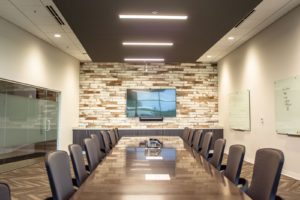
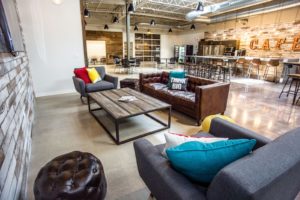
When deciding on your office design, it is important to consider more than just cost or personal preferences. Private offices and open office floor plans each have pros and cons that can affect employee productivity, job satisfaction and work-life balance. According to the Gensler survey, “people prefer open environments with ample on-demand private space to support individual, focused work, but very few say they would prefer a totally private environment. And when rating what constitutes the ‘best’ workplaces overall, ‘team building and collaboration’ is the highest-ranked aspect of a great workplace.
While few employees prefer a “totally private environment,” many employees in open offices have a need to “seek refuge” and find quiet spaces where they can focus on a task or shut out the noise. Often, these individual employees are camping out in meeting rooms.
A study conducted by Density found that “just one person was using meeting rooms 36 percent of the time. It also found that 40 percent of meetings had between two and four people; and the capacity of smaller rooms was exceeded twice as often as rooms designed for five to seven people.”
Considering the inefficient use of space and cost of regularly using large meeting rooms for one or two employees. it may seem logical to shrink their size and number. But it’s not that simple. If you want your employees to be as productive as possible, you need to monitor and measure how people in your company use space. Fortunately, there are new advances in sensor technology that indicate how every room in a building is used without collecting any personally identifiable information or otherwise raising privacy concerns.”
Office hoteling is one way companies are adapting to the work preferences of their employees. Typically, this is reservation-based style of office management where employees schedule their use of workspaces. Given that nearly 90% of the U.S. workforce say they would like to telework at least part time, it’s a good model to ensure fair access to office resources, encourage greater collaboration and optimize space.
Micro offices or “phone booths” are another way to offer more efficient space for employees to go for privacy. Unlike most cubicles, which house one employee daily, phone booths are temporary spaces, meant for a few hours of work at a time. They can be a good and relatively low cost retrofit option as they are often available as a modular office furniture product which can be placed in areas of need and moved when needs change.
“Every company is different, so there is not one single solution to creating an office environment where people do their best work,” said Todd Greenwald, Compass Properties President. “The key is to observe and track the way your employees are using space, then adapt the space to meet their needs. It’s not just about making employees happier; it can also helps your company be more productive and profitable.”
FIVE FACTORS THAT INFLUENCE OFFICE SPACE DECISIONS
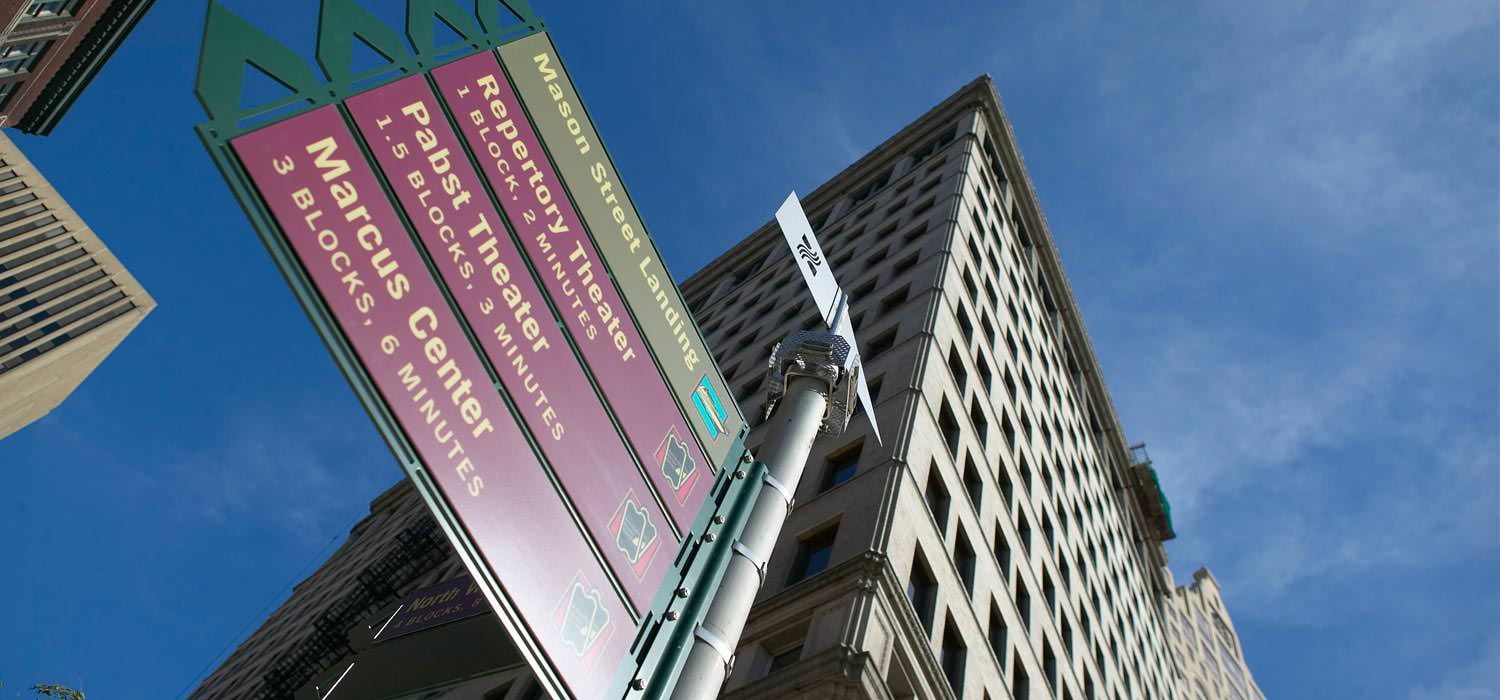
The commercial real estate market is on an “accelerating disruption curve” highlighted by rapid changes in tenant dynamics, customer demographic shifts and an ever-increasing focus on improved services and amenities. In today’s environment, offering the best financial deal is no longer enough to convince companies to sign leases for commercial office space. Companies are making more strategic decisions regarding their office space needs and they are more willing to dictate exactly what they want. Here’s five factors that are having a huge influence on their office space decision-making process.
Flexibility
Flexibility has become the key word for companies searching for space, because their businesses are changing so rapidly. Companies don’t want to be stuck in spaces that inhibit growth. From movable walls to co-working spaces to buildouts, they want flexible space that can be adjusted to their current and future business needs. Creating work space areas that can be easily adapted has become an essential element of office design. Modular soft seating, workbenches, desk pods and “meet point” are examples of choices that support a well-designed and adaptable workplace.
Activity-Based Workplaces
A number of articles and experts have called into question the effectiveness of open plan workspaces which started gaining popularity a decade ago. Today, most work environments have evolved beyond open plan spaces to Activity-Based Workplaces. (ABW). This office concept creates task-oriented solutions that encourage movement and empower people to select the right space for the job at hand. Typically ABWs offer more communal areas, open spaces and fewer private offices. Forward thinking companies recognize that not every employee works best sitting at a desk all day –some of the most productive work environments are those that give employees the choice of alternative spaces from which to work. Hoteling, or providing plug-and-play stations for shared use are also gaining popularity.
Amenities
In the battle to attract top talent, companies are offering an increasing number of office amenities to attract and retain employees. These can include everything from on-site food service to health club facilities, concierge to high tech perks, bike storage to pet friendly services. Our CityCenter@735 building in Milwaukee offers a wide range of amenities that are aligned with the goals of our clients. “When I’m working with a client today, it’s critical to know their business and the type of employees they have, so we can determine what amenities are most appropriate for their needs,” said Sheldon Oppermann, Executive Vice President for Compass Properties.
Maintenance and Operations.
From office temperature to elevator speed, tenants want a problem-free environment. But if problems do happen, they want them resolved quickly. One trend helps address this demand: online notification systems through which tenants can report problems and track response status. When it comes to maintenance and operations, tenants tend to remember the bad, rather than the good. Professor Roy Baumiester at Florida State University researched this phenomenon in their aptly named article, “Bad is Stronger Than Good.” According to Baumiester, “you are more upset about losing $50 than you are happy about gaining $50.” In context of tenants: the hard work invested into a perfectly operating building might go unnoticed, but a day when things go wrong will not. Responding in a timely manner and communicating clearly are best-practices that can reduce the impact of a negative experience.
Urban, Downtown Locations
The recent demand for office properties located in urban markets remains hot, particularly in downtown areas. Companies looking to attract and retain younger employees want offices close to walkable amenities and public transportation. To lure tech-savvy millennials, many companies that years ago moved out to the suburbs are heading back to the urban downtowns that offer the lifestyle this generation of employees desires. “The times have changed and the attitudes have changed,” says Stephen Friedman, a development adviser and urban planner in the Chicago area. “It isn’t just that millennials want to work downtown, it’s that so many of them want to live there.”
Have questions about available space in any of our Wisconsin properties? Please contact us at (608)-294-9400, info@box2191.temp.domains or click here.